
A Hidden Object Puzzle That Tests Your Eyes
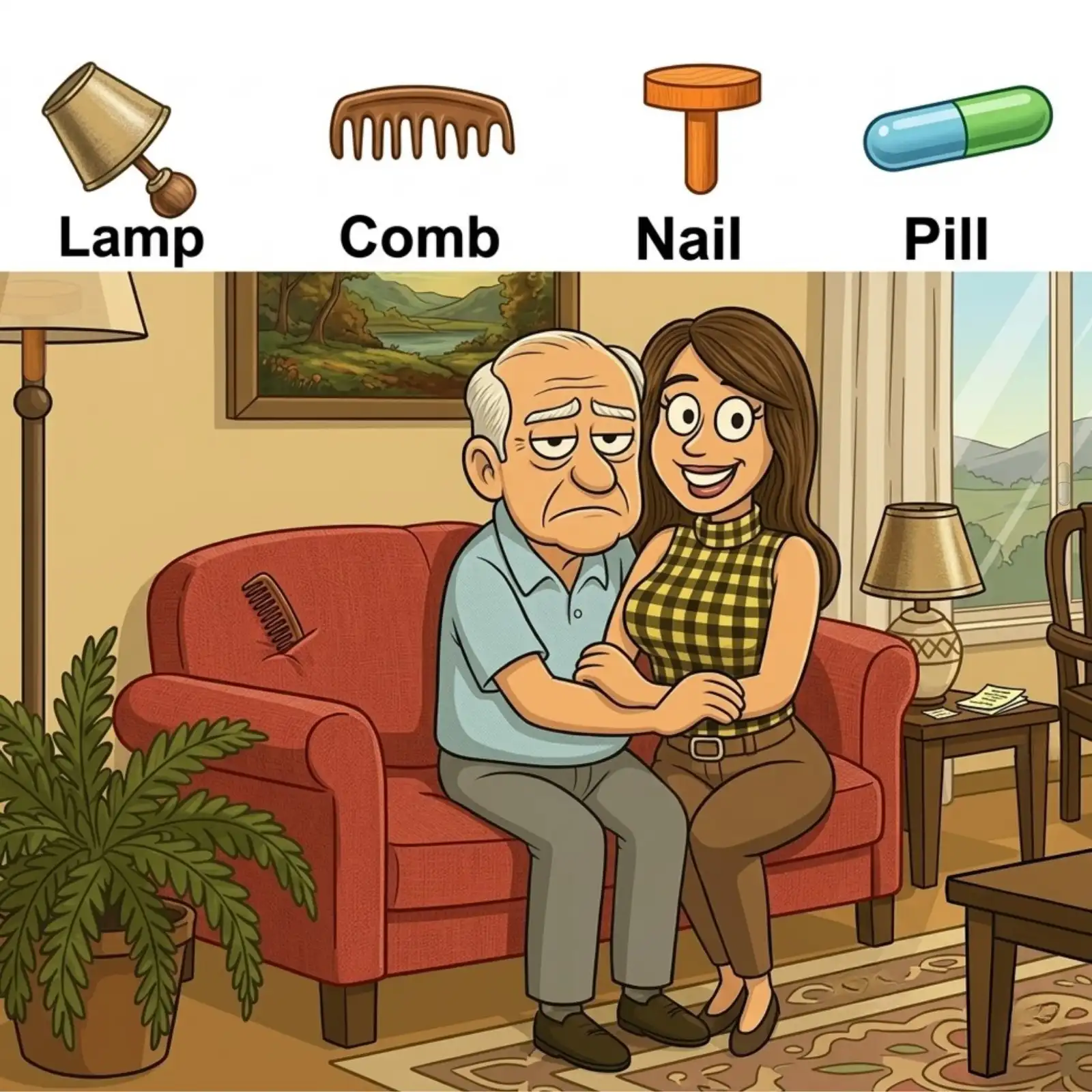
Hidden object puzzles have a way of turning an ordinary scene into a fun visual challenge. At first glance, this image looks like a simple living room illustration with two people sitting on a couch. But once you look more closely, you realize there’s much more going on. Somewhere in the picture, four objects are cleverly hidden: a lamp, a comb, a nail, and a pill.
What makes puzzles like this so enjoyable is how they play with the way we naturally see images. Most of the time, our brains focus on the big picture first—the characters, the furniture, the background, and the general setting. We usually don’t stop to inspect every small line or shape. That’s exactly why hidden object puzzles are so effective: they force us to slow down and notice details we would normally ignore.
In this image, the artist uses everyday objects and blends them smoothly into the illustration. Nothing feels random or out of place. That’s what makes the challenge interesting. The hidden items are not dropped into the scene in an obvious way—they are woven into the shapes, outlines, and parts of the environment so they feel natural. You may spot one object quickly, but the others usually take more time and patience.
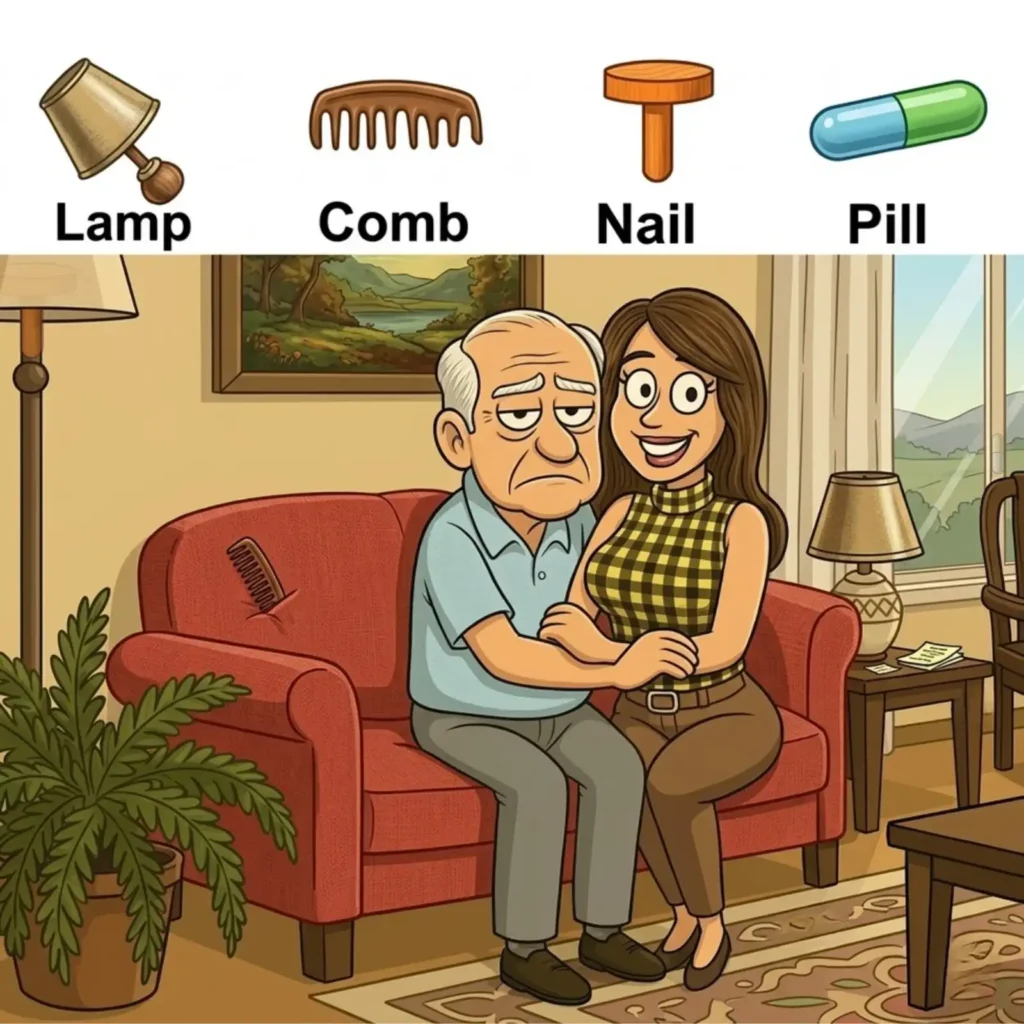
The fun of this kind of puzzle comes from the process of searching. Your eyes move from the couch to the table, from the background to the clothes, and then back again as you begin to question every curve and shadow. A line that first looked decorative might actually be one of the hidden objects. A small detail in the furniture or background might suddenly reveal itself in a new way. That moment of recognition is what makes these puzzles so satisfying.
Another reason these brain teasers work so well is that the objects are familiar. Everyone knows what a lamp, comb, nail, and pill look like. The challenge is not understanding the items—it’s recognizing them when they’ve been disguised within something else. That mix of familiarity and misdirection keeps the puzzle simple to understand but tricky to solve.
This particular puzzle is also visually appealing because the scene feels calm and ordinary. The colors are warm, the room is neatly arranged, and the characters draw your attention right away. That comfortable setting makes the hidden objects even easier to miss. Your brain assumes you already understand the scene, when in reality it still has secrets waiting to be discovered.
The Solution
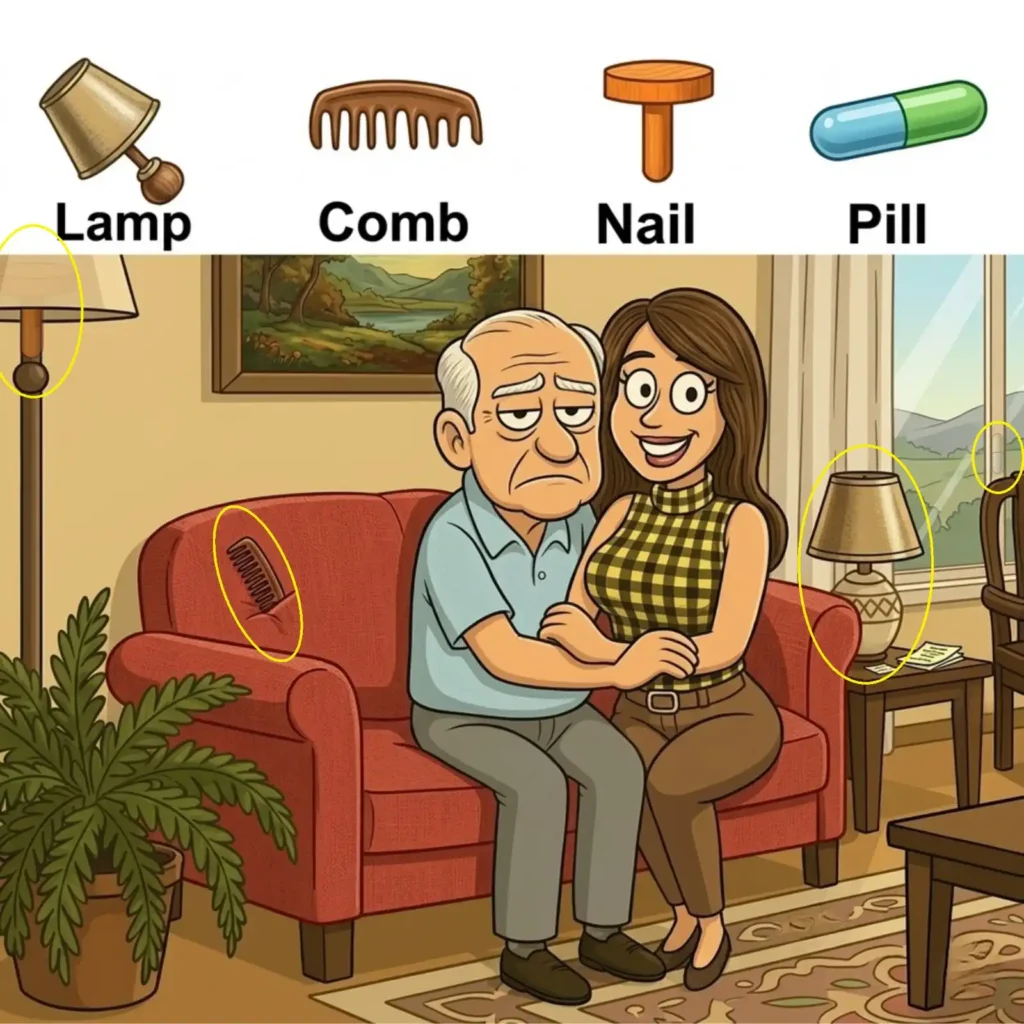
If you had trouble finding them all, the answer image reveals the hidden objects clearly. The comb is blended into the couch, while the other items are subtly incorporated into different parts of the room and background. Once the solution is shown, the hidden shapes suddenly become much easier to recognize, and you can see how cleverly the illustration was designed to hide them in plain sight.
Conclusion
This puzzle is a great example of why hidden object challenges remain so popular. They turn a simple drawing into an interactive experience, rewarding patience, focus, and careful observation. Sometimes, all it takes is a second look to discover what was there the whole time. And that’s exactly what makes these puzzles so much fun.