
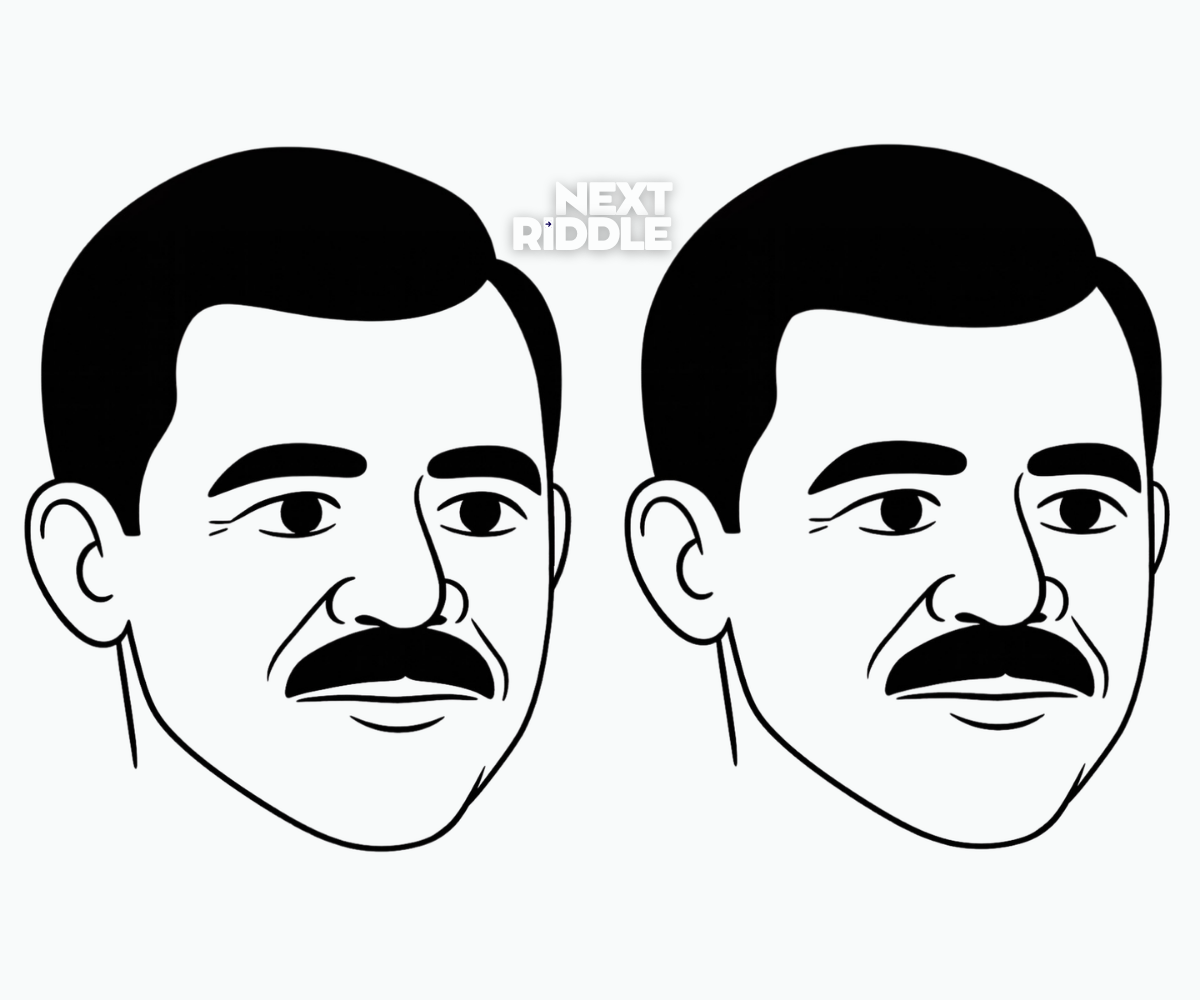
The Puzzle That Tests Sharp Eyes
At first glance, the two faces in this image look identical. The same hair, the same mustache, the same expression. It seems impossible that anything could be different. But appearances can be deceiving.
Hidden in plain sight are two small differences that are easy to miss if you’re not paying close attention. Most people glance quickly, assume the pictures are the same, and move on. But if you slow down, observe carefully, and scan every detail, the differences begin to reveal themselves.
Why Spot-the-Difference Puzzles Are So Addictive
Spot-the-difference puzzles like this one aren’t just fun—they’re a test of patience, focus, and observation.
- The First Glance Effect: Your brain wants to process the image quickly. Once it recognizes a face, it tells you both are the same.
- The Detail Trap: Tiny changes like a fuller line of hair or a slightly different ear shape hide within features we don’t usually question.
- The Reward Factor: The “aha moment” when you finally find the differences feels satisfying because your brain has conquered its own assumptions.
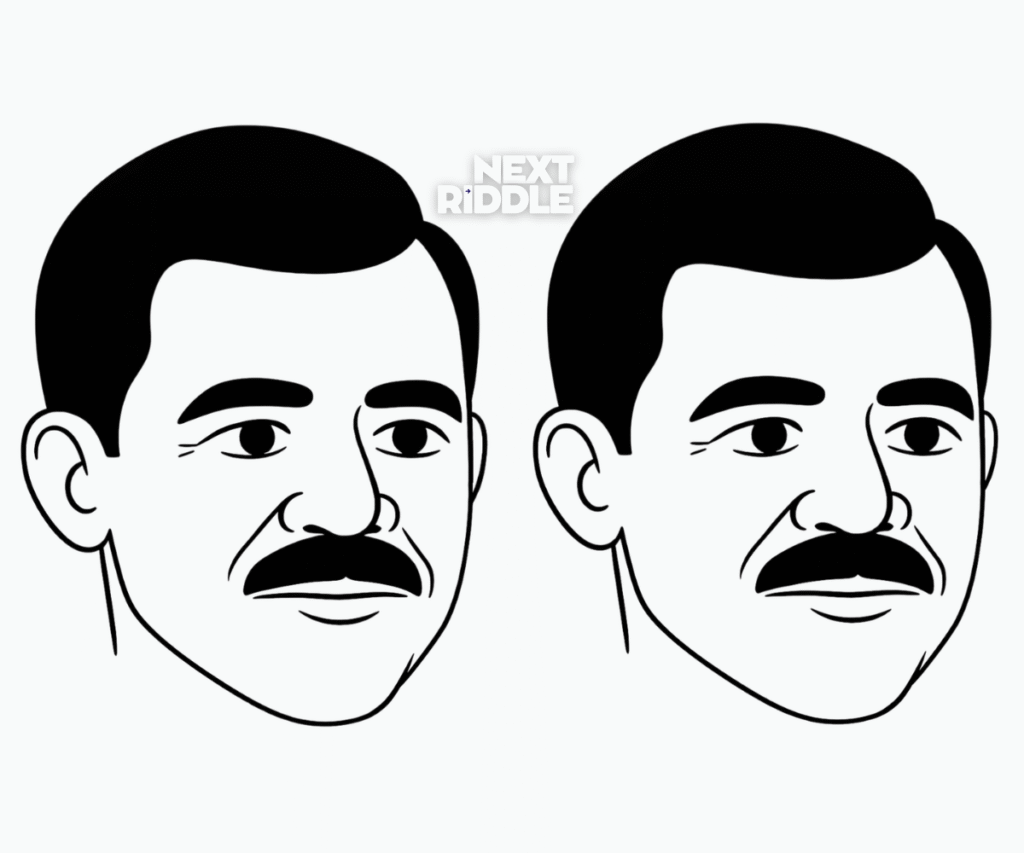
These puzzles work because they challenge how we really see, forcing us to go beyond surface impressions.
Tips for Solving Puzzles Like This
- Compare section by section. Look at the hair, eyes, ears, nose, mouth one by one instead of trying to see the whole face at once.
- Check symmetry. Our brains expect faces to be uniform, so small changes hide more easily.
- Look for thicker lines. Often, puzzles change the thickness, fullness, or shape of a feature to trick your eye.
The Challenge
So, can you spot the two differences between the two faces? Take a closer look before scrolling further. Remember: the changes are small but clear once you know where to look.
The Solution: Two Hidden Differences
After careful comparison, here are the two differences that separate the faces:
- The Hairline – On the right face, the hair is fuller, with a slightly different outline compared to the left face.
- The Ear – The right face has a noticeably larger ear, which is easy to overlook until you directly compare them.
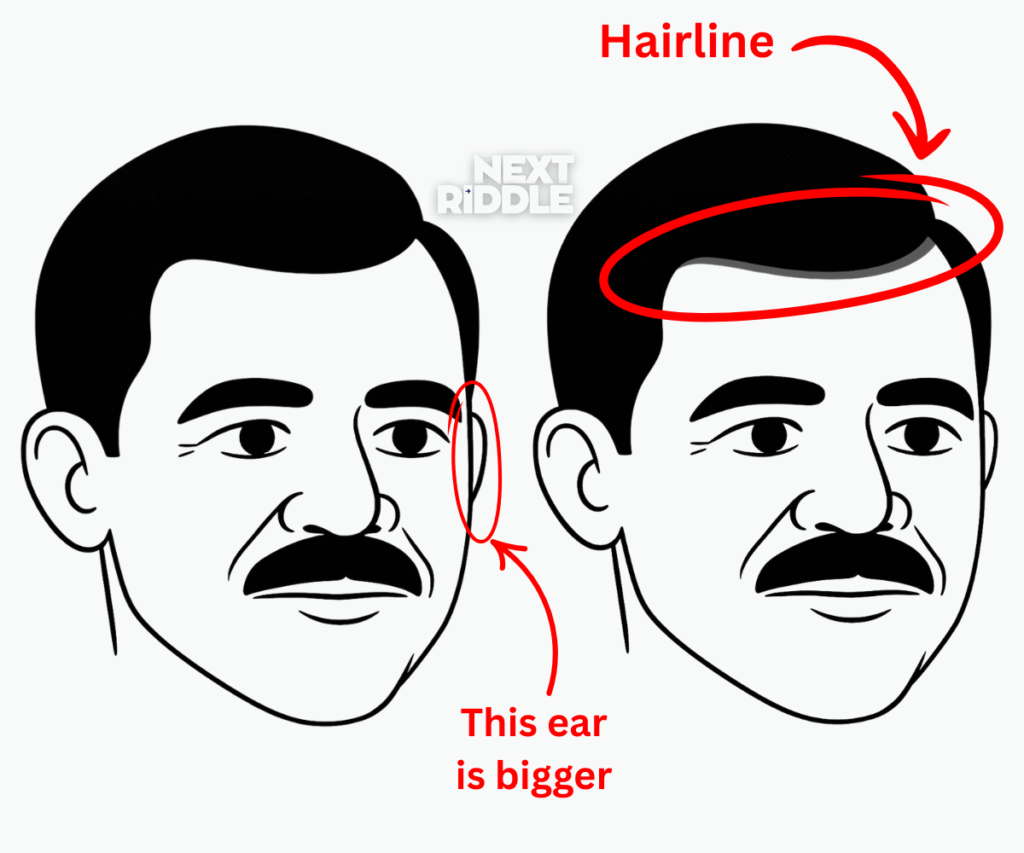
These two subtle adjustments are enough to trick most people. If you spotted them on your own, congratulations—you’ve got sharp eyes!
Conclusion
This puzzle shows how small changes can hide in plain sight. By training yourself to slow down and observe carefully, you not only solve puzzles faster but also sharpen your focus in everyday life. Next time you think two things look identical, take a second look—you might be surprised by what you find.