
A Puzzle That Blends Art and Illusion
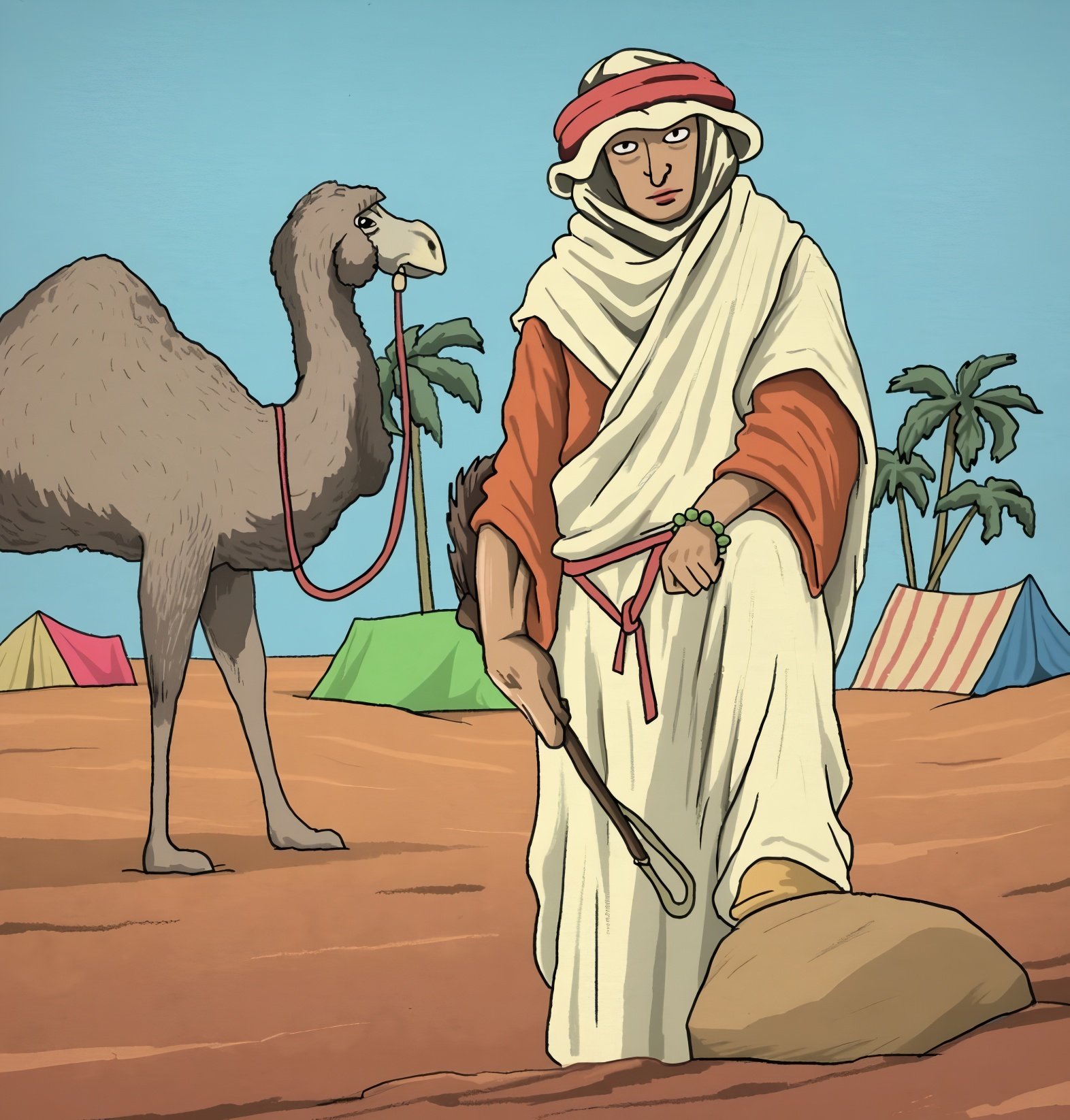
Not all puzzles are about numbers or riddles. Sometimes, the challenge lies in what you can or cannot see. At first glance, the scene before us looks like a simple desert setting: a man in traditional clothing stands with his camel, while colorful tents and palm trees decorate the horizon. It feels ordinary, calm, and straightforward.
But appearances can be deceiving. Hidden within this illustration is another figure—a horse—cleverly woven into the folds and lines of the artwork. The challenge is simple in theory but tricky in practice: can you find the hidden horse in this picture?
Why Our Eyes Get Fooled
The human brain is wired to recognize patterns quickly. When we look at a picture, we tend to identify familiar objects—the camel, the man, the tents—while ignoring what doesn’t immediately stand out. This tendency helps us process information fast in everyday life, but in puzzles like this, it works against us.
The hidden horse is not immediately visible because the artist has disguised it within elements we already “understand.” Instead of drawing a separate, clear horse, the artist used lines, shadows, and shapes from the man’s robe and arm to create its outline. The brain sees “clothing” first and stops searching, unless you force yourself to look deeper.
The Art of Misdirection
What makes this illustration so clever is how the artist deliberately pulls your attention elsewhere.
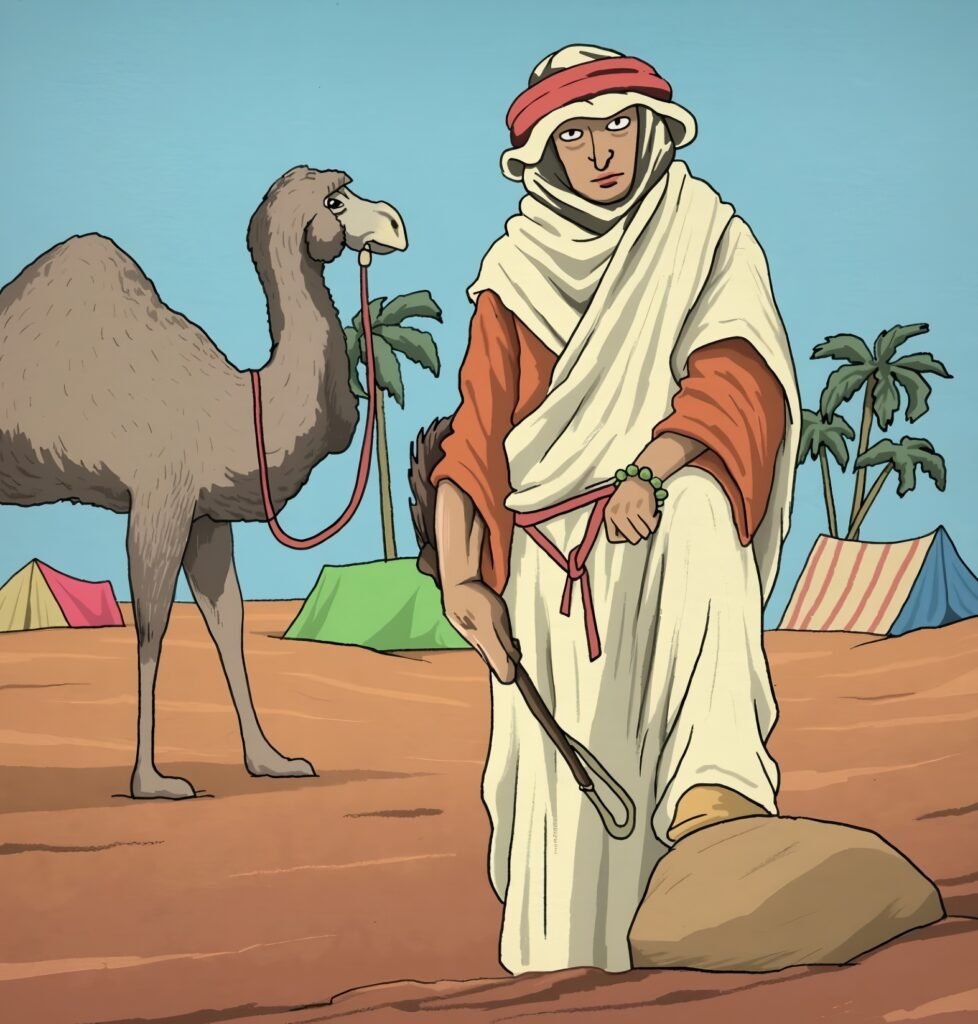
- The camel on the left is a natural focal point—it’s large, it’s detailed, and it feels like the main animal in the scene.
- The traveler’s face and red headscarf are drawn with bold contrast, further anchoring your gaze.
- The desert tents and palm trees in the background create movement and balance, distracting you from looking too closely at the center.
By giving the eye so many obvious things to examine, the horse becomes nearly invisible, despite being right in front of you.
The Hidden Image Challenge
Hidden object puzzles like this one are a perfect example of how art can test more than just eyesight. They demand patience, concentration, and the willingness to see things differently. What looks like a crease in fabric might actually be part of a mane. What seems like a shadow might actually form an outline.
This type of challenge encourages us to question assumptions: is everything really what it first appears to be? Or is there more hiding in plain sight?
Why We Love Hidden Object Puzzles
There’s a reason puzzles like this remain popular across generations:
- The thrill of discovery – The “aha!” moment when you finally spot the horse is a reward in itself.
- Universal accessibility – Unlike math riddles or word games, anyone can attempt this puzzle. All you need is focus and a sharp eye.
- Timeless appeal – Hidden object art transcends language and culture. Whether you’re in New York, Cairo, or Tokyo, you can understand the challenge instantly.
In many ways, puzzles like this are about slowing down. In our fast-paced lives, we rarely take the time to study something carefully. This artwork forces us to pause, scan, and really look at what’s in front of us.
The Conclusion: The Hidden Horse Revealed
So where exactly is the horse hiding? The answer lies in the traveler’s robe and arm. Look closely at his right side (to the left from our perspective): the folds of the robe form the curve of the horse’s neck, while the man’s arm doubles as its mane. Just below, the fabric and shading create the horse’s muzzle, completing the outline.
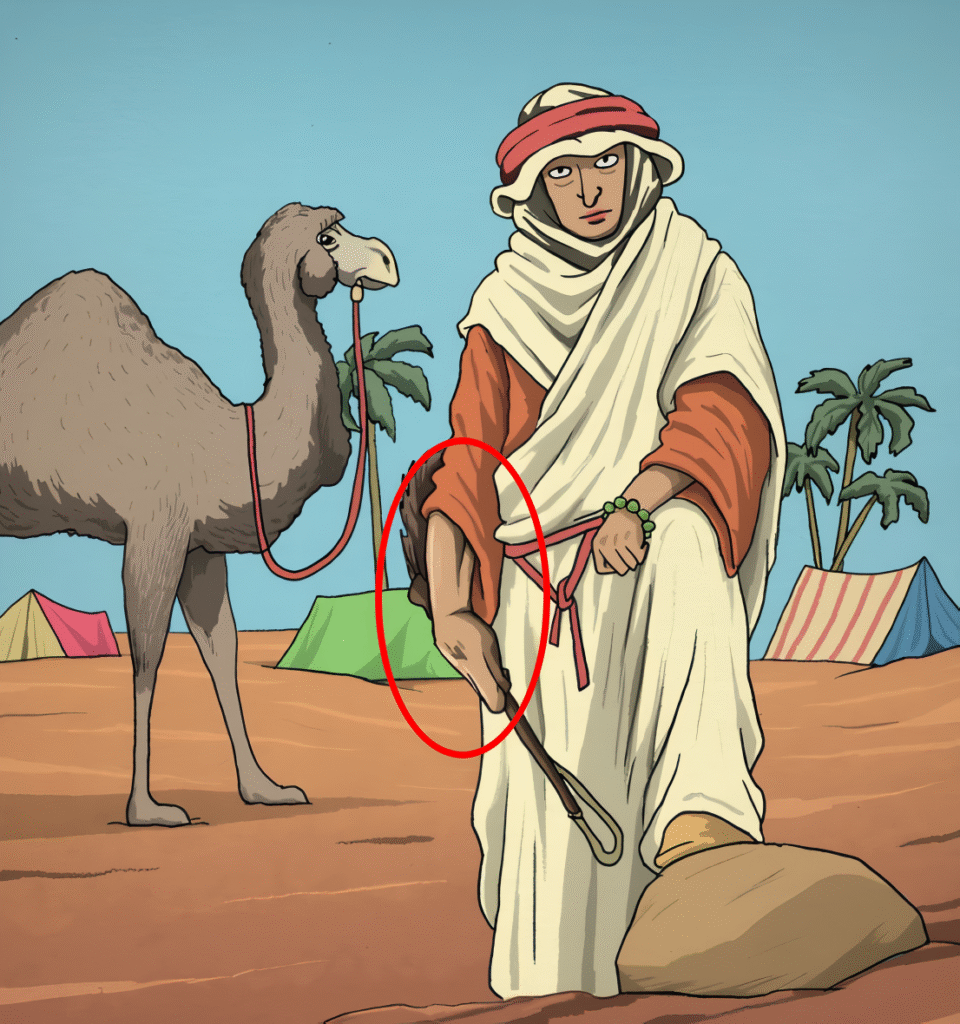
It’s been there the entire time, cleverly disguised in plain sight.
If you spotted it on your own, you can count yourself among the sharpest observers. If not, don’t worry—most people miss it at first. That’s what makes puzzles like this so fascinating: they remind us that even the simplest scenes can hold secrets, waiting to be discovered by those who dare to look twice.